CALL US! 1-415-766-2722
Fun@SanFranciscoJeepTours.com
San Francisco is famous for postcard icons like the Golden Gate Bridge and cable cars—but here’s the plot twist: some of the city’s most memorable places are tucked into tight neighborhoods, perched on steep hills, or hidden down narrow streets where giant sightseeing buses simply can’t go.
That’s why smaller tours have a big advantage. Below are five “bus-proof” spots that deliver better views, better photo stops, and a more local feel—plus quick notes on exactly why buses can’t access them.
If you want the highlights at a glance, these five places show exactly why smaller tours see more of San Francisco:

Why buses can’t visit: Narrow alleyways, tight turns, and residential street layouts that aren’t built for oversized vehicles.
Why it’s worth it: This is where San Francisco’s street-art scene really lives—colorful, bold, political, poetic, and always changing. Balmy Alley and Clarion Alley are the two big names, but the joy is wandering and discovering what’s new.
The Mission District is one of San Francisco’s most vibrant neighborhoods, known for its murals, cafes, and creative energy. Many of the best murals are hidden in the narrow lanes that wind through the neighborhood—exactly the kind of places a big bus can’t even attempt.
A smaller, open-air tour is ideal here because you can actually get into the alley corridors, stop for photos, and hear the backstory behind what you’re seeing—who painted it, what it’s responding to, and why the Mission became San Francisco’s mural capital.
Fun Facts:
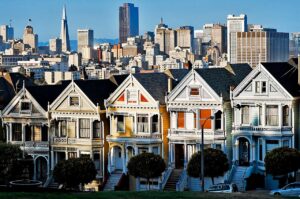
Why buses can’t visit: Narrow residential streets + restrictions in the neighborhood make it a no-go zone for large buses.
Why it’s worth it: It’s one of the most iconic “San Francisco” views in the city—Victorians in the foreground, downtown skyline in the distance. It’s classic for a reason.
If you’re a fan of the ’90s sitcom Full House, you’ll recognize the Painted Ladies immediately. They’re the famous row of Victorian homes across from Alamo Square Park—and they’ve become a must-see for visitors who want that “yep, I’m really in SF” moment.
Big sightseeing buses are banned from driving near the Painted Ladies, but smaller vehicles can get close enough for a proper look (and a proper photo). It’s also a spot where you’ll want time—time to walk into the park, line up the skyline shot, and enjoy the view without feeling rushed.
Fun Facts:
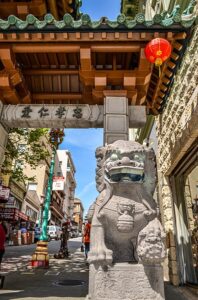
Why buses can’t visit: Tight alley grid, narrow lanes, heavy foot traffic, and street geometry that doesn’t accommodate big vehicles.
Why it’s worth it: Chinatown isn’t just a “stop”—it’s a living neighborhood packed with hidden temples, lantern-lined alleys, and some of the best snack-and-stroll energy in the city.
San Francisco’s Chinatown is the oldest in the U.S., and it’s full of restaurants, shops, bakeries, and historic corners. But the best parts often happen in the alleys—places like Ross Alley and Waverly Place, where the city feels like a maze in the best way.
Smaller tours can thread through Chinatown’s edges and make it easy to hop out for a quick look, a photo, or a snack stop—without the “we’re blocking traffic” problem that comes with larger vehicles.
Fun Facts:
Top 11 Things to Do and See in Chinatown San Francisco
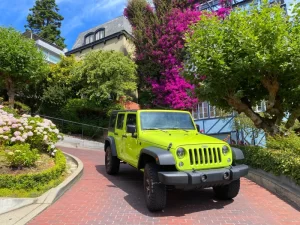
Why buses can’t visit: Tight switchbacks + steep grade + heavy visitor traffic make it unsafe and impractical for large buses.
Why it’s worth it: It’s pure San Francisco weirdness in the best way—zig-zagging turns, perfect landscaping, and those classic “how is this real?” photos.
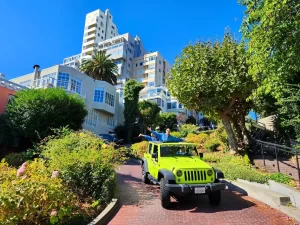
Lombard Street is one of the city’s most famous landmarks, known for its sharp turns and steep slope. The famous zig-zags were designed to make the hill manageable for vehicles—and today it’s one of the most photographed streets in the country.
Large sightseeing buses can’t safely drive the curves, but smaller vehicles can actually experience the famous descent. And since Lombard is all about the “moment,” having the flexibility to time it well (and pause nearby for photos) is a big advantage.
Top Ten Fun Facts About Lombard Street – The Crookedest Street
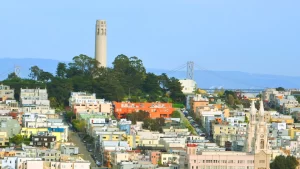
Why buses can’t visit: Steep approach roads, tight turns, and limited maneuvering space near the top of Telegraph Hill.
Why it’s worth it: One of the best view-per-effort payoffs in the city—360° panoramas and a classic SF landmark with real history inside.
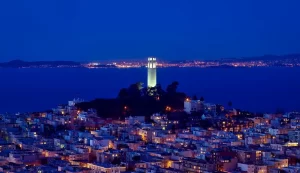
Perched atop Telegraph Hill, Coit Tower is one of San Francisco’s most iconic landmarks. From its observation deck, visitors can enjoy sweeping views of the city, the bay, and beyond. But getting to the top is tricky—especially for large vehicles—because the roads are steep and the turns are tight.
Smaller tours can climb Telegraph Hill more easily, which means you can spend your energy on the fun part: views, photos, and the surprisingly cool interior murals created during the Great Depression as part of a public works project.
These places aren’t “hidden” because they’re secret—they’re “hidden” because San Francisco wasn’t designed for oversized vehicles. Between steep hills, narrow residential streets, and tight turn radiuses, big bus routes are forced into the same wide-road loop.
Smaller vehicles can comfortably reach more neighborhoods and viewpoints, pull over for photo stops, and adapt to real-time conditions (hello, fog). If your goal is to see the famous highlights and the “wow, how did we end up here?” moments, small-group touring is basically the cheat code.
San Francisco’s geography is part of what makes it so beautiful—and also why smaller tours have a big advantage when it comes to seeing the city up close.
It comes down to safety and street design:
San Francisco has steep hills, sharp turns, narrow residential streets, and weight-restricted roads where large buses are limited or prohibited. Smaller vehicles like open-air Jeeps can legally and safely navigate these areas without blocking traffic or risking damage.
This is where the magic happens:
Smaller tours can reach hidden viewpoints, quiet neighborhoods, lesser-known parks, scenic backstreets, and hilltop overlooks that aren’t part of standard big-bus loops. These spots often deliver the most memorable views and a more local feel.
Absolutely—plus more.
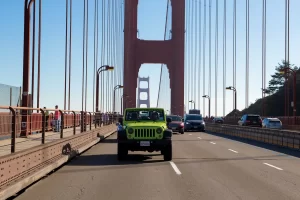
Private Jeep tours still cover must-see highlights like the Golden Gate Bridge, Fisherman’s Wharf, the Palace of Fine Arts, and key neighborhoods, while also weaving in special stops that large buses simply can’t access.
Yes, by a lot.
Smaller vehicles can pull over more easily for photo stops, linger at viewpoints, and even reroute on the fly based on weather or fog. That flexibility means better light, better angles, and more time to capture the shots you actually want.
Bottom line: If you want iconic landmarks and those “how did we end up here?” views, small-group tours give you the best of both worlds.
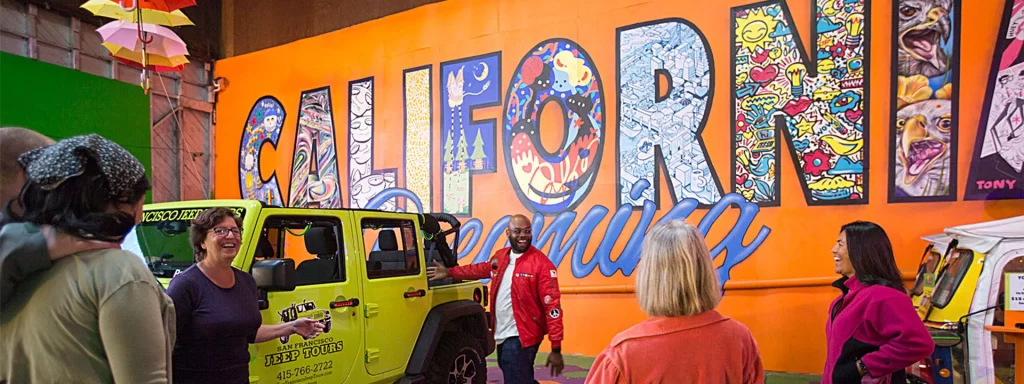
A private small-group Jeep tour is a fun way to experience the beauty and diversity of San Francisco—especially if your crew wants flexibility, photo stops, and a more personal experience. The open-air ride makes it feel like an adventure, and the smaller size means you can reach those “big bus can’t do this” locations that end up being the highlight of the day.
If you’re deciding whether a private Jeep tour is right for your trip, these related reads break it down from different angles—why they’re trending, why they’re worth it, and what they can do that big tours can’t.