CALL US! 1-415-766-2722
Fun@SanFranciscoJeepTours.com

San Francisco boasts a rich tapestry of celebrity homes and famous filming locations, offering a unique glimpse into the lives of iconic figures and the settings of beloved movies and TV shows. From the iconic Full House home in Alamo Square Park to the historic Spreckels Mansion in Pacific Heights, these locations have become must-visit spots for fans and tourists alike. The Haight-Ashbury neighborhood, a hotbed of 1960s counterculture, housed legends like Janis Joplin, the Grateful Dead, and Hunter S. Thompson. Pacific Heights is known for the Mrs. Doubtfire house and Danielle Steel’s residence, while the Marina District features Joe DiMaggio’s former home.
These neighborhoods not only showcase architectural beauty but also encapsulate moments of cultural history, making them a treasure trove for enthusiasts of music, literature, and cinema. Whether you’re a fan of rock legends, literary greats, or cinematic classics, San Francisco’s famous homes provide a fascinating journey through the city’s storied past.
If you’re loving the movie and TV connections here and want to go even deeper, you’ll definitely want to check out our companion guide: Movie and TV Magic: Exploring 10 of San Francisco’s Famous Movie and TV Show Houses That guide zooms in on some of the most recognizable on-screen homes in the city, with extra behind-the-scenes details about how they were used in filming and why they’ve become pop-culture landmarks.
If your goal is to hit multiple neighborhoods (without turning your day into a parking scavenger hunt), a Private Tour San Francisco route is honestly the smoothest way to do it. Famous homes are spread out, many are quick “pull over + photo” stops, and the best route depends on traffic, weather, and what you care about most (TV houses vs. movie scenes vs. big scenic backdrops).
The biggest advantage of a private tour is customization: you can prioritize neighborhoods like Alamo Square Park, Pacific Heights, Russian Hill, and the Marina in one outing, or build a broader route that adds Chinatown, Union Square, and the Presidio.
If you’ve ever seen a San Francisco postcard, odds are it was basically taken right here. Alamo Square is where classic Victorians meet skyline views—and where TV nostalgia gets real fast. It’s an easy stop with huge photo payoff, and it’s one of the best “start here” neighborhoods if you’re building a movie-and-homes route.
Full House House — Full House (TV)
Address: 1709 Broderick St. at Bush St.
Scene / Why it’s famous: Although the show’s interior scenes were filmed on a soundstage, the exterior shots made this Victorian home a nostalgic icon for fans of the Tanner family. The house (owned by producer Jeff Franklin) draws an estimated 1,000 to 1,500 visitors daily, and in 2018 neighbors pushed to reroute bus tours due to crowds. It was listed for sale at $5.5 million.
Visiting tip: Best photos are from across the street—quick stop, stay on the sidewalk, and keep it respectful.
View on Google Maps
The Painted Ladies — Postcard Row + Full House opening credits (plus many films/TV)
Address: 720 Steiner St. at Grove St.
Scene / Why it’s famous: The Painted Ladies are a row of Queen Anne Victorian homes that have appeared across film and TV, including the Full House opening credits. The home at 720 Steiner Street was once home to Alice Walker, author of The Color Purple. Often called “Postcard Row” or the “Seven Sisters,” they were built in the late 1800s and remain one of the most quintessential SF sights.
Visiting tip: Walk up into Alamo Square Park for the classic skyline-behind-the-houses photo.
View on Google Maps
Haight-Ashbury is pure San Francisco legend: counterculture history, music mythology, and a whole lot of stories packed into a few walkable blocks. This neighborhood was ground zero for the Summer of Love energy, and it still feels like a living museum of the 1960s. Even if you’re not a hardcore music fan, the famous addresses here are some of the most iconic in the city.
The Grateful Dead House — Jerry Garcia & The Grateful Dead (1960s)
Address: 710 Ashbury St. at Waller St.
Scene / Why it’s famous: Jerry Garcia and other members of The Grateful Dead lived here from 1966 to 1968, right as the band’s early fame exploded. The house was also the site of a famous 1967 drug bust, cementing its place in rock history. Visitors still stop by to see where the band lived and created music (with local lore tying the Hells Angels to the area, too).
Visiting tip: This is a quick curbside look—don’t block driveways and keep the visit short.
View on Google Maps
Janis Joplin’s Homes — Janis Joplin (1960s)
Address: 122 Lyon Street & 635 Ashbury St. at Page St.
Scene / Why it’s famous: Janis Joplin lived in two Haight-Ashbury locations during the 1960s. Her most documented address was 122 Lyon Street (Apartment #3), though she may also have stayed at 112 Lyon Street. She also lived briefly at the pink house at 635 Ashbury Street. Both are pilgrimage-style stops for fans of the legendary singer.
Visiting tip: Great area to combine with a quick stroll for murals, shops, and classic Haight street scenes.
View on Google Maps
Charles Manson’s Haight-Ashbury Addresses — Summer of Love (1967)
Address: 616 Page St. at Webster St. & 636 Cole St. at Haight St.
Scene / Why it’s famous: Before becoming infamous, Charles Manson lived in Haight-Ashbury during the Summer of Love in 1967. He briefly stayed at 616 Page Street and later at 636 Cole Street, where he drew a small following. His time in San Francisco was short before he moved to Southern California where his cult later committed notorious crimes.
Visiting tip: This is a “history footnote” stop—keep it quick and factual.
View on Google Maps
Jefferson Airplane House — Jefferson Airplane (1968)
Address: 2400 Fulton St. at Willard St.
Scene / Why it’s famous: The band purchased this grand three-story home in 1968. It served as a residence and creative space—and it comes with a serious San Francisco flex: views over Golden Gate Park from the north side. The 17-room property was reportedly bought for around $70,000 and is now a valuable piece of rock history.
Visiting tip: Pair it with a Golden Gate Park loop since you’re right next door.
View on Google Maps
Jimi Hendrix’s Rumored Residence — Jimi Hendrix (rumored)
Address: 1524 Haight St. at Ashbury St.
Scene / Why it’s famous: It’s widely rumored Hendrix lived in San Francisco, though his biographer disputes the claim. Still, 1524 Haight Street is often mentioned as a place he may have stayed briefly—true or not, it adds to the neighborhood’s mythology.
Visiting tip: Treat it as a “legendary rumor” stop and enjoy the Haight vibe around it.
View on Google Maps
Hunter S. Thompson’s Residence — Hunter S. Thompson (1965–1967)
Address: 618 Parnassus Ave. at Stanyan St.
Scene / Why it’s famous: Before becoming a legendary journalist and author, Thompson lived here while immersing himself in SF’s counterculture. His time in the city (notably covering the Hells Angels) helped shape the foundations of Gonzo journalism.
Visiting tip: This stop pairs well with a quick Golden Gate Park drive-by or a Haight stroll.
View on Google Maps
Baxter House — That’s So Raven (TV)
Address: 461 Ashbury St. at Page St.
Scene / Why it’s famous: The Baxter House exterior from the original series is a recognizable filming location for fans of the Disney Channel show, where Raven Baxter’s family life unfolds.
Visiting tip: Easy photo stop—best done as part of a broader Haight neighborhood loop.
View on Google Maps
For the reboot of the series: 419 Miranda Place, San Francisco, CA
(View on Google Maps)
Pacific Heights is where San Francisco goes full “wow.” Think grand architecture, steep streets, and some of the city’s most famous façades from movies and TV. It’s also one of the best neighborhoods for quick drive-by viewing because many of the most recognizable homes are clustered close together—ideal for a smooth, efficient photo loop.
Mrs. Doubtfire House — Mrs. Doubtfire (1993)
Address: 2640 Steiner St. at Broadway St.
Scene / Why it’s famous: This Pacific Heights home became iconic thanks to the beloved 1993 film starring Robin Williams. The house at 2640 Steiner Street is where much of the film’s family drama unfolds, and it remains one of the most visited movie-home stops in the city.
Visiting tip: Go earlier in the day for fewer crowds and easier photos.
View on Google Maps
Danielle Steel’s Mansion (Spreckels Mansion) — Danielle Steel
Address: 2080 Washington St. at Octavia St.
Scene / Why it’s famous: Romance novelist Danielle Steel resides in one of San Francisco’s most impressive mansions. Built in 1912 by sugar magnate Adolph B. Spreckels, it’s surrounded by a tall hedge—so it can be tricky to view—but it’s still a must-see for fans of Pacific Heights grandeur.
Visiting tip: Treat this as a “drive-by architecture” stop since views can be limited.
View on Google Maps
Mia Thermopolis “High School” Exterior — The Princess Diaries
Address: 2601 Lyon St. at Green St.
Scene / Why it’s famous: The exterior of Mia Thermopolis’s high school is actually a private residence used to portray the fictional Anthony R. Grove High School. It’s a classic example of the grand, imposing architecture that defines this neighborhood.
Visiting tip: Quick photo stop—this is a residential corner, so keep it short.
View on Google Maps
Salinger Family Home — Party of Five (TV)
Address: 2311 Broadway at Fillmore St.
Scene / Why it’s famous: The Salinger family home from the 90s series is still remarkably unchanged. It was featured in opening credits and establishing shots and is instantly recognizable to fans of the show’s six-year run (Bailey, Charlie, Julia, Claudia, and Owen).
Visiting tip: Broadway is a great scenic drive—bundle this with other Pacific Heights stops.
View on Google Maps
The Marina District is classic SF scenery: bay breezes, postcard views, and iconic backdrops that Hollywood can’t resist. It’s a neighborhood where celebrity history blends with big, cinematic landmarks—especially around the Palace of Fine Arts. If you want “beautiful location + famous-film energy” in one stop, the Marina always delivers.
Joe DiMaggio’s Home — Joe DiMaggio & Marilyn Monroe era
Address: 2150 Beach St. at Avila St.
Scene / Why it’s famous: Baseball legend Joe DiMaggio lived here during his marriage to Marilyn Monroe. While he was born in Martinez and grew up in North Beach, this Marina District home is notable for its connection to one of Hollywood’s most famous couples.
Visiting tip: Combine with a Palace of Fine Arts stop—it’s nearby and makes a perfect photo pairing.
View on Google Maps
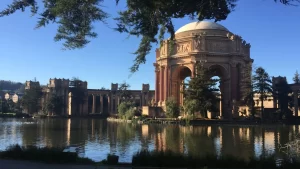
Palace of Fine Arts — major filming backdrop
Place: Palace of Fine Arts (Marina District)
Scene / Why it’s famous: The Palace of Fine Arts has been used as a stunning film backdrop thanks to its grand architecture and lagoon. Notable movies filmed here include:
Visiting tip: Walk around the lagoon for the most “movie set” angles—sunset here is unreal.
Russian Hill is one of those neighborhoods that feels instantly “San Francisco”: dramatic hills, gorgeous homes, and streets that look made for establishing shots. It’s also packed with classic cable car vibes, Lombard Street the Crookedest Street and skyline peeks that make every photo look like a scene. Even quick stops here feel like you’re stepping into a movie set.
Nicolas Cage’s Homes — Nicolas Cage (San Francisco residences)
Address: 898 Francisco St. at Hyde St. &
1945 Franklin St. at Jackson St.
Scene / Why it’s famous: Cage once owned two homes in San Francisco. The 898 Francisco address offered bay views and sits along the Powell/Hyde Cable Car line. He also lived at 1945 Franklin Street, a five-bedroom Victorian where Stephen Hawking once gave a presentation on black holes.
Visiting tip: This area is amazing for “SF hills” photos—pair with a quick cable car sighting if you’re nearby.
View on Google Maps
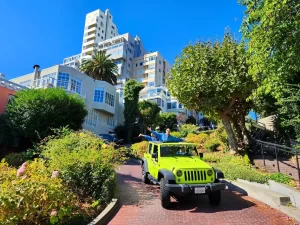
Russian Hill has plenty of famous addresses, but Lombard Street is the neighborhood’s ultimate “you’ve seen this in a movie” superstar. Known as San Francisco’s “crookedest street”, the one-block stretch of steep, brick road with eight tight hairpin turns has been used in films and TV for decades—usually when directors want an instantly recognizable SF moment (or a chase scene that looks downright ridiculous in the best way).
Lombard Street — “The Crookedest Street in the World” (Film & TV Icon)
Address:
Lombard Street (Crooked block between Hyde St. & Leavenworth St.), San Francisco, CA
Scene / Why it’s famous:
Lombard Street’s winding brick switchbacks have shown up as a classic San Francisco visual in major movies and TV shows—especially when a production wants a dramatic downhill shot, a comedic “how is this a real street?” moment, or an iconic neighborhood backdrop tied to the city’s steep hills and postcard views.
Visiting tip:
For the best view, head to the top near Hyde Street and look down the curves—morning is calmer, and late afternoon gives great light. Expect crowds and keep photos quick and respectful (this is a real residential street).
View on Google Maps
San Francisco’s Chinatown is visually unforgettable—lantern-lined streets, historic alleyways, and that instantly recognizable atmosphere filmmakers love. It’s one of the most frequently used “you know exactly where you are” neighborhoods in movies and TV. The best part: many filming spots are close together, so it’s easy to see a lot in a short time.
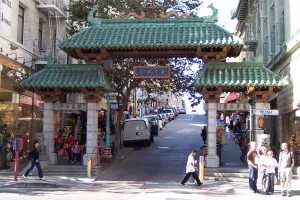
San Francisco’s Chinatown has been a vibrant backdrop for numerous films and TV shows, capturing its unique architecture and cultural essence. Here are some notable productions featuring scenes filmed in Chinatown.
Washington Street Scene — The Dead Pool (1988)
Address: Washington Street, Chinatown, San Francisco, CA
Scene / Why it’s famous: Detective Harry Callahan and his partner Al Quan walk through Chinatown when a restaurant robbery occurs. As they stroll down Washington Street towards the Financial District, gunfire erupts, and a man crashes through a restaurant window.
Visiting tip: Great “street scene” photo stop—go earlier for fewer crowds.
Garfield Elementary Exterior — Mrs. Doubtfire (1993)
Address: 940 Filbert Street (Garfield Elementary School), San Francisco, CA
Scene / Why it’s famous: Daniel Hillard, disguised as Mrs. Doubtfire, speaks with his daughter outside her school.
Visiting tip: Keep it respectful—this is a real school setting.
Ross Alley Filming — The Pursuit of Happyness (2006)
Address: Ross Alley, Chinatown, San Francisco, CA
Scene / Why it’s famous: Chris Gardner (Will Smith) lives in a small apartment in Chinatown. Filming took place on Ross Alley, showcasing narrow streets and historic buildings.
Visiting tip: Ross Alley is one of the most atmospheric little lanes in SF—go slow and look up at the details.
Dragon’s Gate Area — Big Trouble in Little China (1986)
Address: Bush St & Grant Ave (Dragon’s Gate)
Scene / Why it’s famous: The film showcases various locations in Chinatown, including the iconic Dragon’s Gate at the intersection of Bush Street and Grant Avenue.
Visiting tip: If you want the “classic Chinatown entrance” photo, this is the one.
Chinese New Year Festival & Parade Scenes — Flower Drum Song (1961)
Address: Chinatown, San Francisco, CA
Scene / Why it’s famous: The film features scenes from the 1961 San Francisco Chinese New Year Festival and Parade, highlighting Chinatown’s cultural celebrations.
Visiting tip: Come hungry—Chinatown is one of the best neighborhoods in SF for snack-and-stroll exploring.
Chinatown Locations Throughout — Chan Is Missing (1982)
Address: Various locations in Chinatown, San Francisco, CA
Scene / Why it’s famous: Directed by Wayne Wang, this film was shot entirely in Chinatown, capturing daily life and the atmosphere of the community.
Visiting tip: Best explored on foot—short blocks, big detail.
Ross Alley Chase Feel — Indiana Jones and the Temple of Doom (1984)
Address: Ross Alley, Chinatown, San Francisco, CA
Scene / Why it’s famous: The opening sequence features a dramatic car chase through the streets of Chinatown, including scenes filmed in Ross Alley.
Visiting tip: Visit during daytime—Ross Alley is narrow and best enjoyed when you can see the textures and signage.
Chinatown Setting — The Joy Luck Club (1993)
Address: Chinatown, San Francisco, CA
Scene / Why it’s famous: The film portrays various locations in Chinatown, reflecting the lives of Chinese-American families.
Visiting tip: Pair Chinatown with Union Square or North Beach since they’re close by.
Chinatown Scenes — The Presidio (1988)
Address: Chinatown, San Francisco, CA
Scene / Why it’s famous: Features scenes set in Chinatown, adding to the film’s San Francisco setting.
Visiting tip: Chinatown is one of the easiest neighborhoods to stack into a “multi-stop” day.
Chinatown Investigation Moments — The Dead Pool (1988)
Address: Chinatown, San Francisco, CA
Scene / Why it’s famous: Detective Harry Callahan investigates a crime scene in Chinatown, showcasing the neighborhood’s distinctive streets.
Visiting tip: Great spot for “movie atmosphere” photos—just be mindful of pedestrian flow.
The Mission is one of San Francisco’s most vibrant neighborhoods—creative, cultural, and full of real local history. It’s known for murals, music roots, and that energetic “this is the real city” feel. Even when you’re here for famous homes, the neighborhood itself is part of the story.
Carlos Santana’s Home — Carlos Santana (youth)
Address: 205 Mullen Ave. at Bernal Heights Blvd.
Scene / Why it’s famous: Carlos Santana lived here during his youth. His journey from Mexico to San Francisco’s Mission District connects directly to the city’s deep musical history—he attended local schools and began his career in this vibrant neighborhood.
Visiting tip: Combine this with a Mission murals visit if you’re exploring nearby streets.
View on Google Maps
Mel Blanc’s Childhood Home — Mel Blanc (voice acting legend)
Address: 3332 Twenty-First St. at Valencia St.
Scene / Why it’s famous: Mel Blanc (the voice behind Bugs Bunny, Daffy Duck, and many more) was born in San Francisco and lived here as a child. The house still stands today as a private residence—an understated stop for animation fans.
Visiting tip: Great quick stop on the way to Mission food spots and mural alleys.
View on Google Maps
Sea Cliff is quiet, dramatic, and seriously beautiful—think upscale homes, ocean air, and some of the best Golden Gate Bridge views in town. It’s the kind of neighborhood that feels private and cinematic at the same time. This is a perfect stop when you want famous residents plus scenery that looks like it belongs in a final montage.
Ansel Adams’ Homes — Ansel Adams (born in SF)
Address: 129 24th Ave. & 131 24th Ave. (near El Camino Del Mar)
Scene / Why it’s famous: Adams was born in San Francisco and lived in Sea Cliff. His childhood home was at 129 24th Avenue, and later he purchased the property next door at 131 24th Avenue. His photography legacy—especially Yosemite and American landscapes—makes this a meaningful stop for art and history fans.
Visiting tip: Sea Cliff is best on clear days—come for the homes, stay for the views.
View on Google Maps
Robin Williams’ Home — Robin Williams (1990s)
Address: 540 El Camino Del Mar at Sea Cliff Ave.
Scene / Why it’s famous: Robin Williams lived in this Sea Cliff mansion with his children during the 1990s. The six-bedroom home features bay windows with Golden Gate Bridge views and is known for whimsical details like secret rooms and passageways designed for his kids—an elegant home with a playful twist.
Visiting tip: Sunset light here is gorgeous—pair it with a Golden Gate viewpoint drive.
View on Google Maps
The Presidio is one of San Francisco’s most versatile film backdrops: historic buildings, wooded trails, big open lawns, and sweeping bay views all in one place. It can look like a military base, a quiet forest road, or a dramatic scenic overlook depending on the camera angle. That variety is exactly why so many movies and shows have used it over the years.
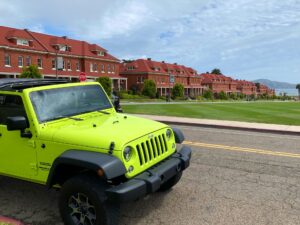
The Presidio of San Francisco, with its historic architecture, scenic vistas, and wooded landscapes, has been featured in numerous films. Some notable movies filmed there include:
The Presidio’s military history, scenic beauty, and unique blend of historic and modern architecture make it a favorite filming location for Hollywood productions.
Golden Gate Park is basically San Francisco’s giant outdoor film set—lush landscapes, iconic gardens, and endless “wait, this is still in the city?” scenery. It’s been used for everything from action scenes to romantic strolls because it can look like a forest, a meadow, or a classic city park in the same afternoon. Even if you’re not hunting specific spots, it’s one of the most cinematic places in SF.
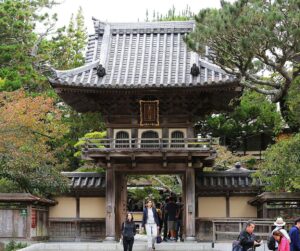
Golden Gate Park has been a popular filming location for movies and TV shows, thanks to its lush landscapes, iconic landmarks, and serene atmosphere. Here are a few of many movies and TV shows that were filmed in or feature scenes set in Golden Gate Park:
Union Square is the “big city” heart of San Francisco—bright lights, classic hotels, shopping streets, and that unmistakable downtown energy. It’s a natural filming magnet because it instantly signals “we’re in SF,” especially for thrillers, dramas, and iconic street scenes. If you’re building a movie-location day, this is a great stop for recognizable urban backdrops.
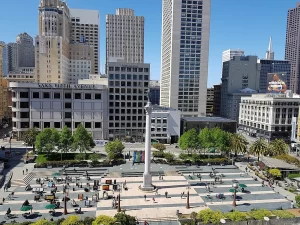
Union Square has served as a backdrop for numerous movies and TV shows due to its vibrant cityscape, shopping district, and bustling energy. Here are some notable productions filmed in or featuring Union Square:
San Francisco’s array of famous homes and filming locations offers a captivating journey through the city’s rich cultural history. From iconic Victorian houses to the former residences of legendary musicians, writers, and actors, these sites not only showcase the architectural beauty of the city but also tell stories of its vibrant past. Whether you’re a fan of classic sitcoms, rock legends, or literary icons, exploring these notable addresses provides a unique way to connect with the city’s diverse artistic heritage.
As you visit these spots, remember to respect the privacy of current residents and savor the experience of walking in the footsteps of some of history’s most celebrated figures.
If you’re collecting San Francisco filming locations like Pokémon, here are a few more fun rabbit holes—landmarks, houses, and one very famous island:
San Francisco is basically a movie set with mortgages. This FAQ covers what you can realistically see (from the street), what’s private, and which tour is best if you want maximum “OMG I recognize that house” moments.
Think iconic facades and classic neighborhoods.
The blog highlights well-known San Francisco homes tied to movies, TV shows, and celebrities, including the Painted Ladies at Alamo Square, Pacific Heights mansions, Russian Hill celebrity residences, and famous filming spots in Chinatown, Union Square, the Presidio, and Golden Gate Park.
Usually no—these are real people’s houses.
Most of the homes discussed are private residences, so you’ll admire them from the street and nearby parks or viewpoints. This guide focuses on safe, respectful viewing spots—not interior access.
It’s primarily a driving route by neighborhood, because the locations are spread across the city. You can walk within a neighborhood (like Chinatown or Alamo Square), but most people combine several neighborhoods in one day.
Morning is best for fewer crowds at iconic homes. Late afternoon is best for dramatic light—especially at Alamo Square and Sea Cliff. If you want that glowy “movie still” look, aim for golden hour.
Go longer so your guide can hit more neighborhoods.
For the most movie, TV, and celebrity homes in one outing, the best option is a longer private city sightseeing route so your guide can prioritize Alamo Square Park, Pacific Heights, Russian Hill, and other neighborhoods featured here.
Yes—this is the best “redwoods + city icons” combo day.
Yes. On a full-day route, the morning can focus on Muir Woods and Marin, while the afternoon city portion can be customized to include the Painted Ladies, Pacific Heights mansions, and other famous homes highlighted in the blog.
Totally—kids love the “spot it!” factor.
Kids and adults alike enjoy recognizing houses from shows like Full House, learning quirky trivia, and seeing beautiful residential architecture. It’s a fun “I’ve seen that!” style scavenger hunt.
You can do parts without a car, but to hit multiple neighborhoods efficiently, driving (or a private tour) makes it much easier. The stops are spread out, and parking near famous houses can be tricky.
Not all. Many are private residences, while others (like the Palace of Fine Arts, Union Square, the Presidio, and Golden Gate Park) are public. For private homes, the respectful approach is street-view only.
Be respectful: no trespassing, no blocking driveways, keep photos quick, and remember people live here. The goal is fun sightseeing—not “celebrity hunting.”